Recycling and Sustainability for Landscaping Edmonton
 Landscaping Edmonton is committed to building greener outdoor spaces through practical recycling and sustainability measures that reduce waste, conserve resources, and support the local community. Our landscaping recycling approach is designed to keep reusable materials in circulation for as long as possible, while minimizing the amount sent to landfill. From soil and green waste recovery to selective material sorting, every project is handled with an eye toward lower carbon impact and better environmental performance.
We work toward a clear recycling percentage target of 85% diversion from landfill across eligible landscaping and site-clearance materials. That means we aim to recover wood, stone, mulch, concrete, metal, cardboard packaging, and organic matter whenever local conditions allow. This target is tracked across our operations and reviewed regularly so our sustainable landscaping Edmonton practices stay realistic, transparent, and continuously improving. Where suitable, materials are separated for reuse, while non-recoverable items are directed to approved recycling or disposal facilities.
In the Edmonton area, waste management often benefits from a boroughs-style separation mindset, where different material streams are sorted at the source to improve recovery rates. We follow that same principle on landscaping jobs by separating green waste, inert rubble, and mixed construction debris as early as possible. This helps prevent contamination and supports cleaner recycling streams.  Whether it is leaf litter, pruned branches, broken paving pieces, or old timber, our team treats each material type with a tailored recovery plan.
Local logistics also matter. We make regular use of local transfer stations and approved waste-handling points around Edmonton to ensure recyclable loads move efficiently into the correct processing streams. Choosing nearby facilities helps reduce transport emissions and keeps the project footprint smaller. In practice, that means our eco-friendly landscaping Edmonton work is not only about what happens on site, but also about how materials are collected, sorted, and routed afterward.
Our recycling process includes a mix of practical activities relevant to the region, such as separating topsoil for reuse, diverting clean wood chips into mulch production, and recovering plant matter for composting. We also organize dedicated streams for metal edging, plastic containers, and cardboard packaging from deliveries. These small but important steps support a more circular approach to Edmonton landscaping sustainability, where useful materials are kept in use rather than discarded. For larger clear-outs, we coordinate with facilities that can handle mixed loads while still maximizing diversion.
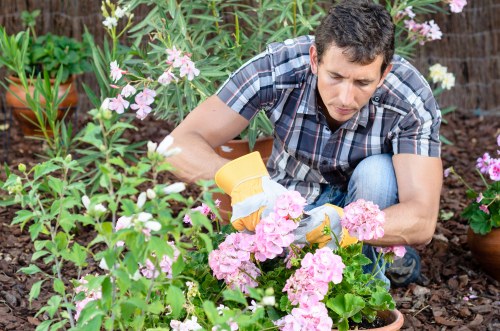 Another part of our sustainability commitment is our partnership network. We collaborate with local charities and community organizations to donate usable items such as surplus pavers, intact planters, edging materials, benches, and garden accessories. When appropriate, these items can be repurposed for community gardens, housing projects, or neighborhood improvements. This helps extend the life of materials and gives our recycling landscaping Edmonton process a meaningful social benefit in addition to the environmental one.
We also prioritize low-carbon vans and efficient route planning to cut fuel consumption across our operations. Our fleet strategy focuses on vehicles with reduced emissions, smart load planning, and fewer unnecessary trips. By using low-carbon vans for local transport, Landscaping Edmonton lowers the climate impact of moving crew members, tools, and recovered materials between sites and facilities. This is a practical way to support low-emission landscaping without compromising service reliability.
In day-to-day work, sustainability includes simple habits that make a measurable difference. Crews are trained to keep reusable materials clean, avoid cross-contamination, and stack waste efficiently so loads are safer and more economical to transport. We also encourage selective dismantling during removals, which allows salvageable items to be saved before demolition waste is generated. That approach supports the wider goals of green landscaping Edmonton and strengthens our ability to meet diversion targets year after year.
 For projects that produce organic waste, we favor composting and biomass recovery when the material is suitable. Grass clippings, leaves, hedge trimmings, and other plant-based debris can often be processed into useful soil amendments rather than sent to landfill. Where local facilities permit, this also helps create a cleaner loop for landscaping by-products. Our team applies the same careful sorting standards to seasonal cleanups, renovation jobs, and full property restorations, making Edmonton sustainable landscaping part of the project from start to finish.
Responsible recycling is not a one-time effort; it is built into the way we plan each job. We specify waste separation methods in advance, choose the right transfer station for the material type, and look for donation opportunities before disposal becomes necessary. This layered approach reduces waste, supports charities, and improves the environmental performance of every project. It is one reason our landscaping sustainability Edmonton strategy is centered on continuous improvement rather than simple compliance.
By combining a strong recycling percentage target, access to local transfer stations, partnerships with charities, and the use of low-carbon vans, Landscaping Edmonton helps clients achieve outdoor spaces that are attractive, functional, and more responsible. From borough-style waste separation habits to reuse-focused sorting and donation pathways, every part of the process supports a cleaner future.  With consistent effort, recycled landscaping materials and smart transport choices can make a real difference to the city and the communities that depend on it.